Norman Rockwell's The Dugout: A Timeless Portrait of the 1948 Chicago Cubs
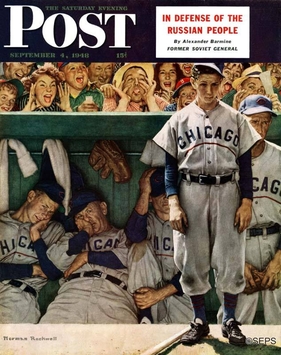
As spring breathes new life into baseball diamonds across America, sparking fresh hopes for fans, there’s one masterpiece that perfectly encapsulates the enduring drama of the national pastime, reminding us that every season has its highs and lows. Norman Rockwell, the quintessential chronicler of American life, left behind a legacy rich with evocative imagery, and among his most beloved works is "The Dugout." This iconic painting, capturing the crestfallen expressions of the
Norman Rockwell Chicago Cubs of 1948, offers far more than just a snapshot of a game; it's a profound study of human emotion, an artistic triumph, and a cherished piece of Americana. Today, this narrative gem holds a place of honor at the Art Institute of Chicago, a testament to its enduring power and significance.
The Genesis of an Icon: Rockwell's Vision for The Dugout
Norman Rockwell built his legendary career illustrating the everyday fabric of American society, from heartwarming family scenes to poignant political moments. For nearly five decades, his insightful and accessible style graced the covers of the *Saturday Evening Post*, making him a household name and his artworks immediate cultural touchstones. In 1948, the *Post* commissioned Rockwell for a baseball-related piece, a subject ripe for his distinctive blend of realism and emotional depth.
Rockwell, ever the meticulous artist, sought genuine inspiration. His journey led him to Braves Field in Boston in May 1948. It was there, witnessing a doubleheader where the then-Boston Braves swept the
Chicago Cubs, that he found his narrative. The scene was perfectly set: the raw, palpable agony of defeat etched on the faces of the losing Cubs players, starkly contrasted by the unbridled elation of the opposing fans behind the dugout. This dramatic juxtaposition became the central theme for "The Dugout," transforming a simple game into a powerful commentary on victory and loss. Rockwell's genius lay in his ability to freeze a fleeting moment, imbuing it with universal resonance that transcends the specific game or team.
Capturing Defeat: The 1948 Chicago Cubs and the Boston Braves
The specific event that inspired "The Dugout" occurred on May 23, 1948. On that fateful day, the Boston Braves delivered a crushing doubleheader sweep against the visiting
Chicago Cubs. For the Braves fans, who were enduring their own protracted 40-year World Series drought—a historical parallel sometimes referred to as the "Curse of the Bambino" for its similar impact on fan morale—this victory was a moment of pure, unadulterated joy. Their cheers and heckles, depicted with vibrant energy in Rockwell's painting, underline the sweet taste of victory against a struggling opponent.
Conversely, for the Cubs players, the scene in "The Dugout" is one of profound dejection. Rockwell painstakingly posed and photographed actual Cubs personnel to achieve this desired effect. Featured prominently are pitcher Bob Rush, manager Charlie Grimm, catcher Al "Rube" Walker, and pitcher Johnny Schmitz, all wearing expressions of profound despondency. Their slouched postures, downcast eyes, and general air of defeat speak volumes. This wasn't merely a depiction of a baseball team losing; it was an exploration of what it means to face disappointment publicly, a relatable human experience whether on a baseball field or in life. The painting beautifully captures the solitary burden of loss, even amidst a team, and the stark contrast with the external world's celebratory indifference.
The Master's Process: Crafting Emotional Depth on Canvas
Norman Rockwell's artistic process was as intricate as the emotions he sought to convey. He was known for his rigorous approach, meticulously planning every detail before putting brush to canvas. For "The Dugout," this involved extensive photography. He not only posed the actual Cubs players to capture their crestfallen expressions but also arranged for volunteers—including the daughter of a Braves coach—to mime the ecstatic reactions of the fans behind them. This careful staging allowed him to control the narrative and emotional impact with precision.
Perhaps the most revealing anecdote about Rockwell's dedication to authenticity involves the prominent figure of the batboy. This central character, symbolizing youthful despair, was in fact based on the Braves’ 17-year-old batboy, Frank McNulty. Rockwell paid him $5 to don a
Chicago Cubs uniform and pose. The artist reportedly struggled for hours to elicit the "desired expression of sadness" from McNulty, adjusting the tilt of his cap and requesting a variety of melancholic facial expressions until he achieved the perfect look of youthful dejection. This tireless pursuit of emotional truth underscores Rockwell’s commitment to his craft.
Once he had all the necessary photographic references, Rockwell returned to his studio. There, he embarked on several preparatory studies using graphite, charcoal, and oil, refining compositions and color palettes before beginning the final elaborate work. It’s fascinating to note that the final oil painting, now at the Art Institute of Chicago, possesses a "wonderful green glow" and painterly quality that differs subtly from the mass-produced *Saturday Evening Post* cover, revealing the nuances of Rockwell's hand as a painter rather than merely an illustrator. To delve deeper into the artistic journey and techniques behind this masterpiece, explore
Beyond the Canvas: The Creation of Rockwell's Cubs Masterpiece.
A Treasured Legacy: The Dugout's Journey to the Art Institute of Chicago
For decades after its publication on the cover of the *Saturday Evening Post*, "The Dugout" remained a treasured piece for art collectors and baseball enthusiasts alike. Its status as one of nearly 320 *Post* covers by Rockwell solidifies its place in his expansive oeuvre. The painting last sold at auction in 2009 for a significant sum, reflecting its growing appreciation. More recently, this iconic work found its permanent home at the Art Institute of Chicago, a generous gift from former Illinois Governor Bruce Rauner and his wife, Diana Rauner.
Its installation in the museum's Arts of the Americas gallery, placed adjacent to Grant Wood's celebrated works, marks a significant moment. It not only elevates Rockwell's "illustration" to the status of high art but also highlights its importance within the broader narrative of American visual culture. Sarah Kelly Oehler, the gallery’s curator, emphasized how thrilled the museum was to provide visitors an opportunity to experience this "quintessential American artist, known for capturing relatable facets of American society." For the
Chicago Cubs organization itself, the acquisition was particularly poignant. Cubs executive chairman Tom Ricketts noted its fitting tribute to America’s pastime, especially as the franchise celebrated its 150-year anniversary. The decision to house a painting so deeply intertwined with the city’s beloved baseball team in one of its most prestigious cultural institutions feels inherently right, offering Chicagoans and visitors a powerful connection to both art and sports history. For further details on this significant acquisition, read
Art Institute Unveils Rockwell's Iconic Chicago Cubs Painting.
Conclusion
Norman Rockwell's "The Dugout" transcends its initial purpose as a magazine cover to become an enduring symbol of perseverance, disappointment, and the human spirit woven into the fabric of America's favorite game. It’s more than just a painting of the
Norman Rockwell Chicago Cubs; it's a poignant snapshot of a shared experience, a masterful blend of art and history that continues to resonate with viewers today. Whether you're a devoted Cubs fan, an admirer of Rockwell's unparalleled artistry, or simply someone who appreciates the universal emotions depicted within, "The Dugout" offers a rich, timeless narrative that continues to captivate and inspire. Its presence in the Art Institute of Chicago ensures that this quintessential piece of Americana will inspire reflection on the triumphs and heartbreaks of life for generations to come.