Beyond the Canvas: The Creation of Rockwell's Cubs Masterpiece
Norman Rockwell, an undisputed master of American visual storytelling, had an unparalleled knack for capturing the nuanced tapestry of everyday life. His illustrations, gracing the covers of the
Saturday Evening Post for nearly five decades, became iconic reflections of the nation's heart and humor. Among his most celebrated works stands
The Dugout, a poignant and deeply relatable portrayal of the
Norman Rockwell Chicago Cubs in a moment of profound dejection. This masterpiece, now a cherished fixture at the Art Institute of Chicago, offers not just a glimpse into a baseball game but a timeless narrative about victory, defeat, and the enduring spirit of sport.
Recently, the Art Institute of Chicago celebrated America's national pastime by installing its first-ever Norman Rockwell painting, *The Dugout*, in its Arts of the Americas gallery. This marquee placement highlights the painting's significance, not only as a classic piece of American art but also as a cultural touchstone representing the beloved Chicago Cubs. Its arrival at such a prestigious institution reaffirms Rockwell's place as a quintessential American artist whose work continues to resonate deeply with audiences across generations.
The Genesis of a Masterpiece: Rockwell's Vision for the Cubs
The inspiration for
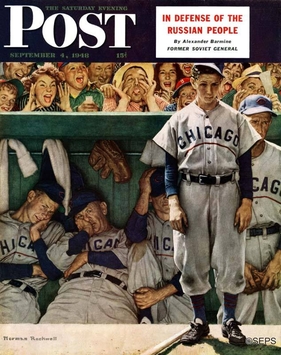
The Dugout stemmed from a specific event in May 1948. Commissioned by the *Saturday Evening Post* for a baseball-themed cover, Rockwell, ever the meticulous observer, traveled to Boston's Braves Field. There, he witnessed a doubleheader where the Boston Braves — then known for their own lengthy World Series drought – swept the Chicago Cubs. It was in the stark contrast between the crestfallen Cubs players and the jubilant, heckling Braves fans behind the dugout that Rockwell found his narrative gold.
He sought to juxtapose the raw "agony of defeat" experienced by the Cubs with the "ecstatic cheers" of the winning team's supporters. This focus on contrasting human emotion was a hallmark of Rockwell's genius, allowing him to transform a simple baseball scene into a universal commentary on life's highs and lows. The specific moment of the Cubs' loss provided a perfect backdrop for a story about resilience, sportsmanship, and the often-brutal realities of competition. The painting, therefore, isn't just about a game; it's about the shared human experience of falling short and facing the music. For a deeper dive into the historical context of this iconic painting, consider reading
Norman Rockwell's The Dugout: The Story of the 1948 Cubs.
Meticulous Craftsmanship: Behind the Brushstrokes of *The Dugout*
Rockwell’s distinctive style, characterized by its accessibility and realistic detail, was no accident. It was the result of an incredibly thorough and demanding artistic process. For *The Dugout*, he didn't merely sketch from memory. Instead, he meticulously planned and executed a photographic session to capture the exact expressions he envisioned.
He posed actual
Norman Rockwell Chicago Cubs players – pitcher Bob Rush, manager Charlie Grimm, catcher Al “Rube” Walker, and pitcher Johnny Schmitz – encouraging them to display disgruntled and dejected expressions. Their slumped shoulders, downcast eyes, and weary faces became the foundation for the central figures. For the elated fans behind the dugout, Rockwell recruited volunteers, including the daughter of a Braves coach, to mime celebratory reactions, ensuring authenticity in their joyous jeers and cheers.
Perhaps the most famous story from this creative process involves the Cubs batboy, who is prominently featured in the foreground of the painting. This figure was based on the Braves' 17-year-old batboy, Frank McNulty, who was paid $5 to don a Cubs uniform for the shoot. Rockwell famously "struggled to obtain the desired expression of sadness from McNulty." Over several hours, the artist painstakingly adjusted the tilt of the batboy's cap and requested a variety of facial expressions until he achieved the perfect look of youthful, somber resignation. This dedication to capturing genuine emotion, no matter how difficult, underscores Rockwell's commitment to his craft and his unique ability to connect with the human experience on canvas.
Once he had all the necessary photographic references, Rockwell returned to his studio. His process involved creating multiple studies in graphite, charcoal, and oil, refining compositions and expressions before embarking on the final, elaborate oil painting. Curators note the painting's "very painterly" quality, with a "beautiful sense of light and color" and a "wonderful green glow" that sets it apart from its printed *Saturday Evening Post* cover rendition. This attention to detail and artistic nuance is what elevates *The Dugout* from a mere illustration to a truly exceptional work of art.
A Cultural Touchstone: Why *The Dugout* Resonates Beyond Baseball
*The Dugout* transcends its immediate subject matter to become a powerful cultural touchstone, speaking volumes about American identity and the universal human condition. Rockwell, through his accessible, realistic style, masterfully captures emotions that everyone can relate to – the sting of defeat, the joy of victory, and the shared experience of community through sport.
Baseball, often dubbed America's national pastime, provides the perfect backdrop for Rockwell's narrative prowess. The painting speaks to the enduring appeal of the game, its capacity to evoke strong emotions, and its role in shaping collective memory. For fans of the Chicago Cubs, in particular, the painting holds a special place. It perfectly encapsulates an era of the team's history, reflecting the "lovable loser" narrative that, for decades, endeared them to millions before their historic 2016 World Series win. Cubs executive chairman Tom Ricketts himself stated, "It is fitting [that] the Art Institute honor *The Dugout*, a classic tribute to America’s pastime featuring our beloved Cubs, especially as we celebrate our 150-year anniversary as a National League franchise."
Beyond the diamond, *The Dugout* invites viewers to contemplate resilience in the face of adversity, the camaraderie within a team, and the sometimes-harsh reality of public judgment. Rockwell's genius lies in his ability to freeze a moment in time, laden with such profound emotional depth, making it relatable to anyone who has ever experienced triumph or heartbreak. This is why *The Dugout* isn't just a painting for baseball enthusiasts; it's a painting for anyone who appreciates the rich tapestry of human emotion.
*The Dugout* Finds Its Forever Home: The Art Institute of Chicago
The installation of *The Dugout* at the Art Institute of Chicago marks a significant milestone. It is the first painting by Norman Rockwell to enter the museum's collection, a testament to its artistic merit and cultural importance. This acquisition was made possible through the generous gift of former Illinois Governor Bruce Rauner and his wife, Diana Rauner, ensuring that this iconic piece will be preserved and enjoyed by the public for generations to come.
The painting's placement within the museum's Arts of the Americas gallery, directly adjacent to Grant Wood's equally iconic *American Gothic*, speaks volumes about its recognized status in American art history. Sarah Kelly Oehler, the gallery’s curator and vice president of curatorial strategy, articulates this sentiment: "We are so thrilled to provide our visitors with an opportunity to experience this quintessential American artist, known for capturing relatable facets of American society from politics to social rituals and in this case, America’s favorite pastime, baseball."
The monetary value of *The Dugout* has also appreciated significantly, underscoring its cultural capital. It last sold at auction in 2009 for $662,500, with current estimates placing its value between $700,000 and $1 million. However, its true value extends far beyond its price tag, lying in its ability to evoke nostalgia, spark conversation, and connect viewers to a shared American narrative. The Art Institute's decision to feature this painting prominently underscores Rockwell's enduring relevance and the power of his work to reflect and shape our understanding of American life. For more details on the unveiling and significance of this acquisition, check out
Art Institute Unveils Rockwell's Iconic Chicago Cubs Painting.
Conclusion
Norman Rockwell's
The Dugout stands as a magnificent example of art's capacity to freeze a moment in time, brimming with universal emotion. Through his meticulous process and profound understanding of the human spirit, Rockwell transformed a simple baseball game into a lasting narrative of hope, disappointment, and the enduring passion for America's favorite pastime. Now, beautifully displayed at the Art Institute of Chicago, this iconic portrayal of the
Norman Rockwell Chicago Cubs continues to captivate and inspire, reminding us all of the stories that unfold both on and beyond the canvas.